
This year, in August 2026, we are going to witness not one but two exciting astronomical events. Within a span of just over two weeks, two different eclipses are going to occur.
- Total Solar Eclipse – 12th August, 2026
- Partial Lunar Eclipse – 27 – 28th August, 2026
This doesn’t happen very often, and below is a guide to help you understand and watch both of them.
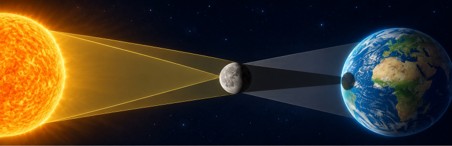
Total Solar Eclipse (12th August, 2026)
A total solar eclipse occurs when the Moon passes directly between the Earth and the Sun. It completely covers the Sun for observers in the path of totality.
Totality is a brief period when the Moon completely covers the Sun and the path of totality is a narrow area on earth where the observers can experience totality.
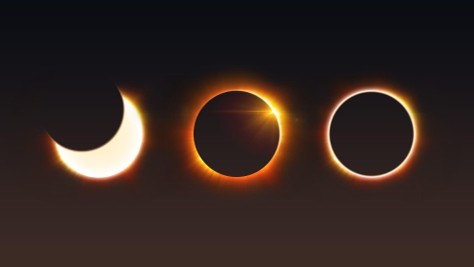
For a few magical minutes, the sky turns dark, and stars and bright planets start to appear. You will witness the beautiful outer layer of the Sun shining around the dark silhouette of the Moon.
This time, the path of totality passes through these regions:
- Greenland
- Iceland
- Spain
- Portugal (a small part)
- Northern Russia
Some places in the Northern Hemisphere, mostly northern parts of the US, Canada, Europe, and northwestern Africa, will experience a partial solar eclipse.
Important Safety Note
While watching a partial solar eclipse, observers should never look directly at the Sun without certified eclipse glasses. Only people in the region of complete totality can briefly watch it without eye protection.
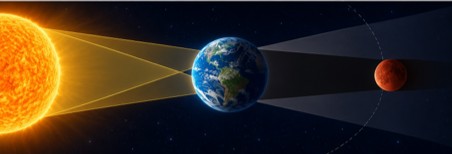
Partial Lunar Eclipse (27–28th August, 2026)
Now it’s the Moon’s turn.
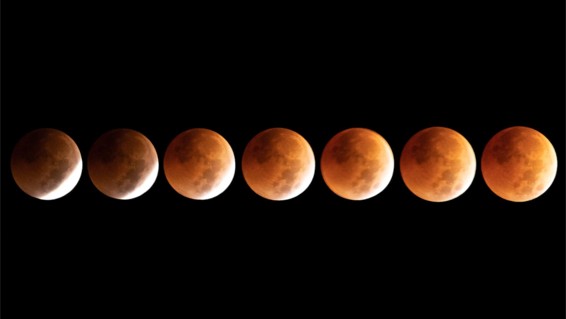
In just over two weeks, a partial lunar eclipse is going to occur. This happens when the Earth moves between the Sun and the Moon, causing the Moon to pass through Earth’s darkest shadow (umbra). We’ll notice a slow-moving dark shadow covering part of the Moon before moving away again.
The upcoming eclipse is going to be a very deep partial lunar eclipse with 96.1% moon surface coverage at maximum eclipse point.
This eclipse can be observed from most parts of these regions:
- Europe
- Africa
- The Americas
- Eastern Pacific regions
A lunar eclipse is completely safe to watch.
The Beauty of These Eclipses and How to Watch Them
This is a fantastic chance for skywatchers, astronomers, and photographers to witness two different types of eclipses in the same month. These kinds of events remind us of the beauty of the motion of celestial objects and how, when aligned perfectly, they can create unforgettable sights.
For people in India, and for those in other parts of the world who cannot travel to the viewing locations, here are some of the official links to watch the eclipses live:
NASA provides official information, eclipse maps, and visibility details for both the 12 August 2026 Total Solar Eclipse and the 27–28 August 2026 Partial Lunar Eclipse. ESA will broadcast the Total Solar Eclipse live from Europe, while timeanddate.com offers detailed local timings, visibility maps, and live coverage for both eclipses.
NASA – Total Solar Eclipse (12 August 2026):
https://science.nasa.gov/eclipses/future-eclipses/total-solar-eclipse-on-august-12-2026/
NASA – Future Eclipses (includes the 27–28 August 2026 Partial Lunar Eclipse):
https://science.nasa.gov/eclipses/future-eclipses/
ESA Web TV – Total Solar Eclipse Portal:
ESA – Join ESA to watch a total solar eclipse on 12 August 2026
ESA Web TV – Total Solar Eclipse Live:
https://watch.esa.int/
timeanddate – Total Solar Eclipse (12 August 2026):
https://www.timeanddate.com/eclipse/solar/2026-august-12
timeanddate – Partial Lunar Eclipse (27–28 August 2026):
https://www.timeanddate.com/eclipse/lunar/2026-august-28
Finally, let’s end with one exciting news: the next solar eclipse visible from India is going to be in August, 2027. Join us for our upcoming events.