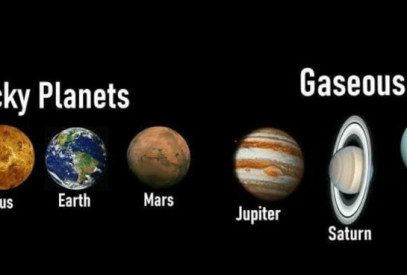
Throughout our universe, including our own solar system, there are many Earth-like planets having solid cores that could reveal to us the fascinating secrets of worlds built from stone and fire. We explore more of these truths in the following sections.
Latest Articles
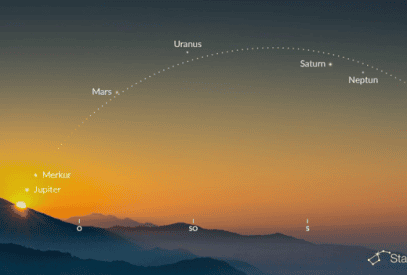
If you have ever dreamed of seeing multiple planets decorating the morning sky at the same time, 12 August 2026 is a date you should circle on your calendar. Before sunrise, six planets – Mercury, Jupiter, Mars, Saturn, Uranus, and Neptune – will appear stretched across the eastern sky in what astronomers popularly call a planet parade. While not all six planets will be visible with the naked eye, the event promises to be one of the most exciting astronomical spectacles of the year.
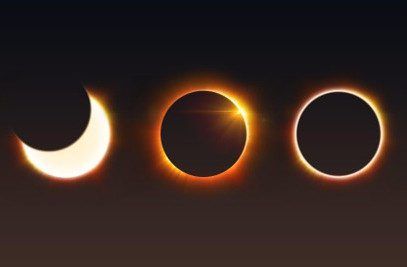
This year, in August 2026, we are going to witness not one but two exciting astronomical events. Within a span of just over two weeks, two different eclipses are going to occur.
Total Solar Eclipse – 12th August, 2026
Partial Lunar Eclipse – 27 – 28th August, 2026
This doesn’t happen very often, and below is a guide to help you understand and watch both of them.
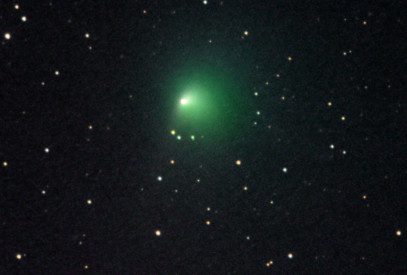
While stars burn steadily for millions or billions of years, occasionally an icy comet sweeps through the inner solar system, unfurling a glowing tail across the dark canvas. This midyear, the highlight of the night sky belongs to this fascinating celestial time capsule.
Winter is the most exciting season for Stargazing enthusiasts, and the Winter Circle is one of the most spectacular celestial patterns visible in the night sky. If you are planning stargazing near Mumbai, winter offers crystal-clear skies, bright stars, and unforgettable cosmic views—especially from dark-sky locations like Stargazing at Bhandardara and Stargazing at Mahuli. This guide will help you understand…
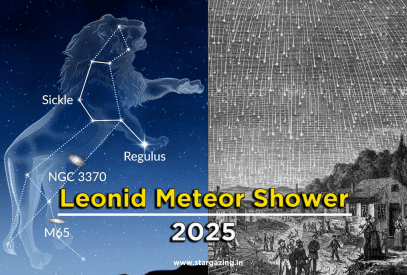
Get ready for a spectacular cosmic display this November! As the Diwali lights fade, the night sky takes center stage with its own dazzling fireworks — the Leonid Meteor Shower 2025. This breathtaking celestial event will light up the heavens with streaks of shooting stars, and the best part is, you can witness it from stunning dark-sky locations near Mumbai.…
This October, skywatchers near Mumbai are in for a rare celestial treat — not one, but two bright comets, Comet SWAN (C/2025 R2) and Comet Lemmon (C/2025 A6), lighting up the evening sky. Around October 21, both comets will reach their closest approach to Earth, coinciding perfectly with the Orionid Meteor Shower and a new moon night, ensuring dark, crystal-clear…
Top 5 Best Stargazing Places Near Mumbai for an Unforgettable Night Under the Stars If you’re searching for the best stargazing places near Mumbai, you’re in for a cosmic treat! Maharashtra is blessed with several dark-sky locations that offer breathtaking views of stars, planets, and even deep-sky objects through telescopes. Whether you’re an astronomy lover, a curious beginner, or a…
If you have ever looked up at the night sky and wondered about the mysteries of the stars, then Stargazing at Bhandardara with Stargazing Mumbai is an experience you should not miss. Just a few hours away from the city, Bhandardara is one of the most beautiful and serene locations for stargazing near Mumbai. Surrounded by mountains, lakes, and forests,…
As Earth orbits the Sun, our planet periodically crosses paths with streams of cosmic debris. These encounters result in one of the most dazzling displays nature has to offer – meteor showers. In 2024, skywatchers have several opportunities to witness these celestial fireworks light up the night sky. What is a Meteor Shower? Meteors are particles of dust and rock…
Since the dawn of time, humanity has gazed up at the luminous moon sailing through darkened skies. This celestial orb shining down on us almost seems tranquil as it cycles through its lunar phases. However, our cosmic neighbor hiding up there harbors downright bone-chilling facts…revelations that transform the moon into a floating orb of horror! As researchers uncover bizarre information…
India recently introduced the four astronauts selected for its ambitious Gaganyaan mission, putting the country one step closer to sending humans to space. Gaganyaan, meaning “sky craft” in Hindi, will be India’s first crewed space mission, cementing its place among the elite club of nations having independent human spaceflight capability. The four astronauts – Prashanth Nair, Ajit Krishnan, Angad Pratap,…